In late 2024, my dashboard looked green.
A prestigious Engineering Director title at Syncron. Good salary. Solid performance reviews. If you looked at the metrics, I was winning.
But the logs told a different story.
I was stuck in an infinite loop. The same recurring meetings, the same documents that nobody reads. I was leading initiatives that felt good to launch but didn't actually move the needle. I wasn't burning out, but I was stagnating.
The environment was stable, but I wasn't learning anything new. I reached a local maximum: I felt I was able to adapt to all the changes at my company – but it was still not the same as experiencing something completely different.
This was different from past experiences. Each year before, something exciting was happening in my career. Now I couldn't see it.
I needed a hard reset. Was this the time to quit?
By Decision Engineering, I mean treating life and career choices like system-design dilemmas: observable signals, explicit constraints, and feedback loops instead of gut-driven reactions. Here is the protocol I used to audit my life, take a calculated break without turning into a hippie, and build a system to handle the mess of 2025.
1. The Audit (Check the Logs)
Don't make life decisions based only on a gut feeling. Gut feelings are usually just stress, and you need data.
I started a simple log. Every Friday for six months, I answered 5 questions from Cate Huston's blog. Am I learning? Are my new skills useful elsewhere? Would I hire a friend? Do I feel confident? And how does my body react to the job?
When I graphed the data, the lines didn't match. It wasn't a bad week. It was a life bug with the highest severity.
2. The Diagnosis (The Optimization Window: Time × Money × Energy)
Standard advice is "find a new job." I didn't want to follow it blindly.
I looked at the optimization problem instead. We all trade three things: Time, Money, and Energy.
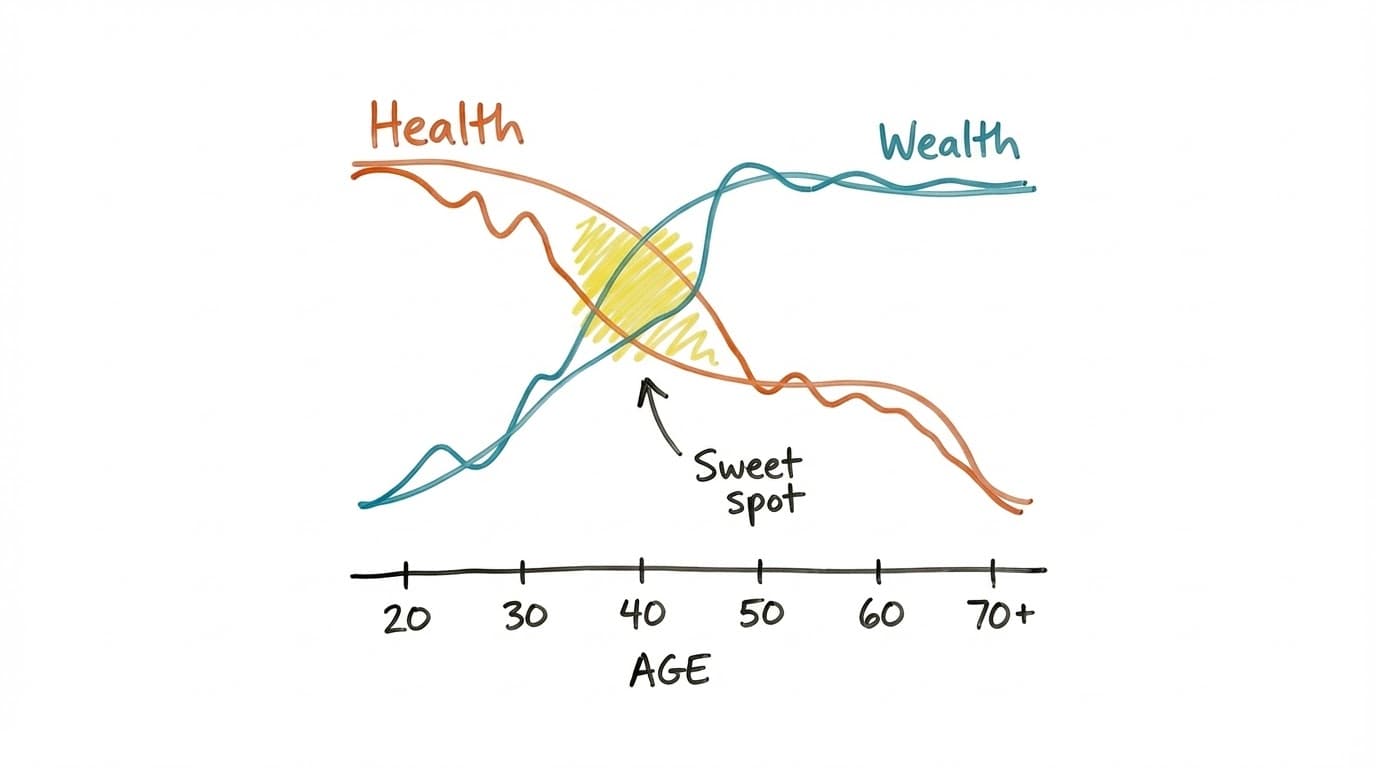
- Juniors: Have time and energy, not money.
- Seniors: Have money, no time, and fading energy.
As your bank account grows, your knees get worse. You can trek the Andes at 40. At 80, if you're really lucky, maybe you can hop on a cruise ship. And if you're not that lucky... Well, maybe you don't want to take that bet.
Another useful mental model is memory dividends, explained by Bill Perkins in his great book "Die with Zero". The idea is: you benefit from your life experiences not only during, but also after them. Just like financial dividends, memory dividends are the reward that comes with investing early. Each memory from an early-life adventure that you recall at 80 is a dividend paid to you thanks to this single investment.
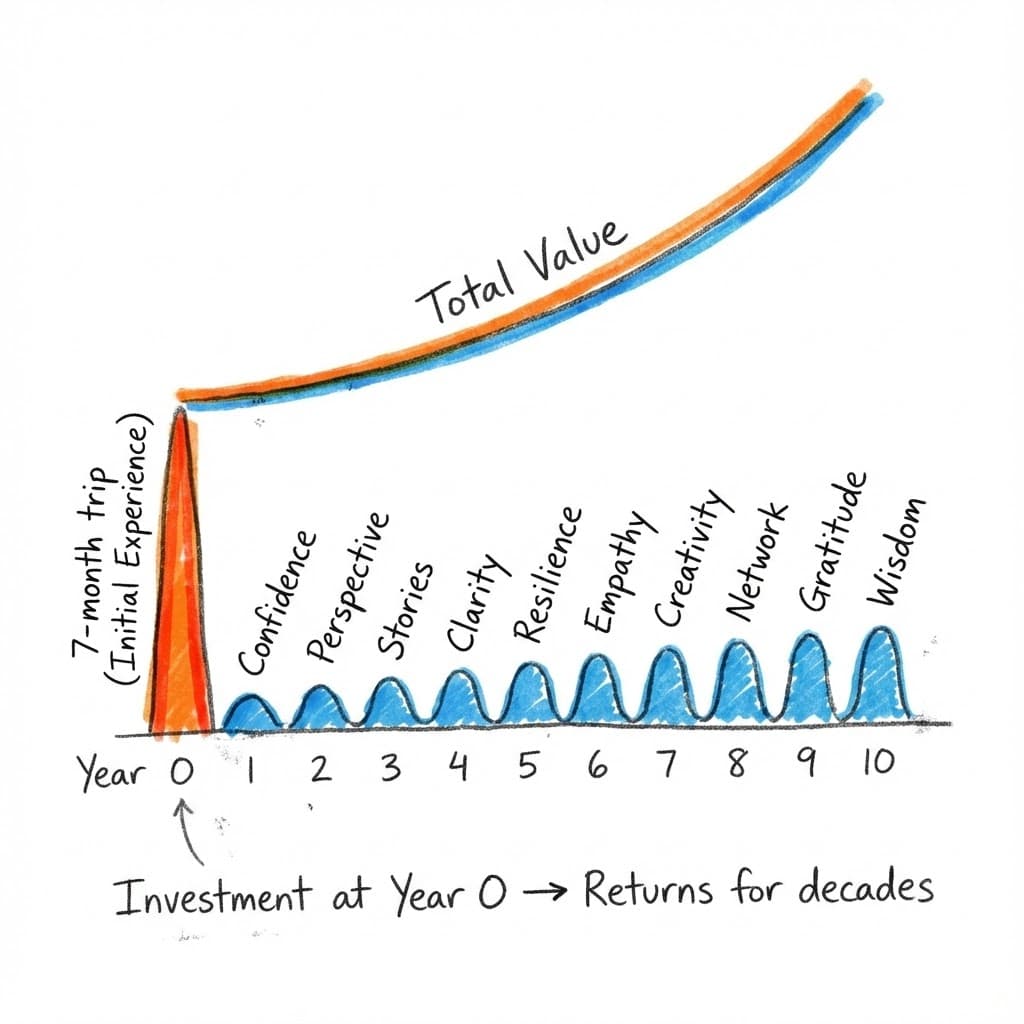
My wife and I ran the numbers and found that this was the perfect time. We had the savings. We had no blockers at home. Our health and wealth curves were crossing right now at a high enough level.
It looked risky to our friends. To us, waiting ten years was much more risky. We spent a few weeks with our noses in spreadsheets: burn rates, country spending coefficients, flight ticket prices, worst-case scenarios. It was clear – the model works in theory. So we had to test it in production.
3. The Triage (Reality Check)
We spent seven months in South America. This isn't a travel blog, though. (But you can check out our Instagram profile.) Here, it's about what happens when you strip away the job title.
Status is not everything. You need more than this. In Warsaw, I was a director. In rural Chile, I was just a guy with a backpack who had to adapt to the Latin American mentality and deal with the complexities of Spanish grammar. I had to shift from "Expert" to "Learner." Status is a lagging indicator, but curiosity is a leading one – so I decided: now I'll feed this curiosity more than ever to make this journey happen. Soon enough, I knew how roadblocks shape daily life in the Andean countries – and I was free of prejudice that would make travel only worse.
Filter the noise. Not everything is urgent. We spent three days on the Salar de Uyuni salt flats. No cell service. No Jira, just flamingos and llamas. It forced a hard reset.
- Noise: Slack, emails, news headlines.
- Signal: Food, accommodation, health.
I realized most of what I worried about back home didn't matter where we were now. None of the people on the road worried about the rise of vibe coding, so why would I?

Agility is real. Perfect plans are just plans. I broke my collarbone falling off a mountain bike in Bolivia. The plan said "Hiking." The X-ray said "No." We didn't panic or fly home, we just tweaked the itinerary. That's what true agility looks like; it's coping when reality punches you in the face.
4. The System (The Fix)
When we returned in late 2025, the tech job market felt fundamentally different from the one I had left.
The signal-to-noise ratio is terrible right now. AI hype, hundreds of mismatched job listings, and companies pressuring you into thinking you have just become obsolete because you haven't used their product.
If I just applied to LinkedIn ads on autopilot (or worse: used a bot to spam recruiters with my resume), I'd lose my mind. So I built a firewall.
Seven months of traveling hadn't changed one thing – I'm still a software engineer by heart. So I rolled up my sleeves, and decided: this was the best possible way to learn the new stacks and tools like Cursor (an AI-powered code editor). In a few weeks, I coded a personal decision tool called Compathy. It uses Next.js and the OpenAI API to score job descriptions against my constraints (resume, job preferences, priorities, life vision). If a role scores 55% because the culture looks toxic or it requires me to have 10 years of experience with Swift, I will never see it twice.
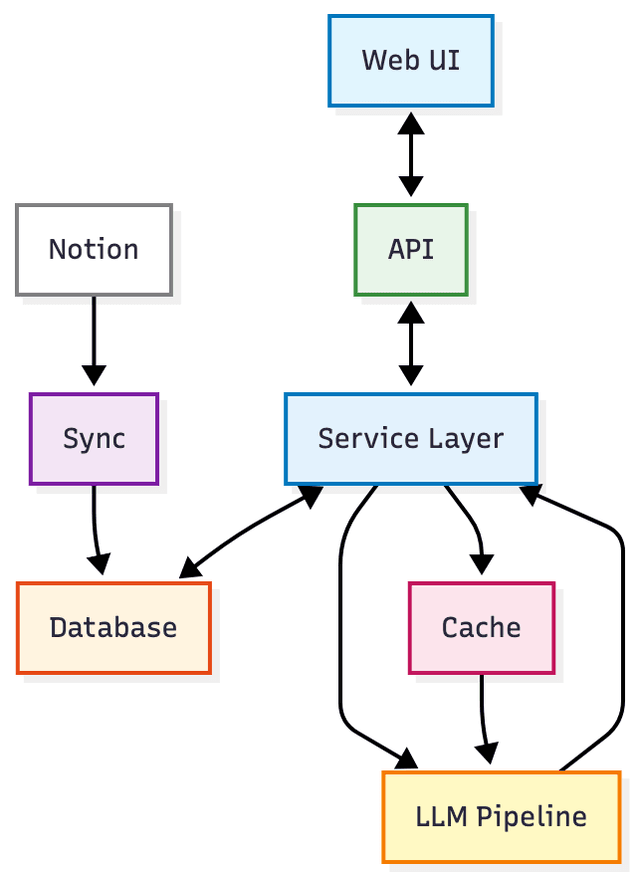
It protects my attention. I stopped worrying about becoming obsolete and ensured that I focus on the right options ahead.
Which road are you on?
A career break costs money. But the ROI wasn't the photos, and there is even more beyond memories and mastering the Spanish subjunctive clause.
The travel gave me clarity. Compathy keeps that clarity safe.
Do you need to take a career break? Absolutely not, this would be absurd advice. Taking many months off is a personal decision that might be terrible for you. So don't go to that Buddhist temple in Nepal yet.
But do you need a system? Yes. It doesn't need to be an app: a simple spreadsheet or a weekly talk with your partner might be enough for you. But it's good to have something that will protect you from making choices just based on emotions.
You have three options for today's reality:
- Autopilot: Do what worked five years ago. (This will crash.)
- Chaos: React to every good-sounding job ad. (This burns you out.)
- GPS: Build a system to filter the noise.
Which road are you on? The conditions are not stable. Take the wheel.
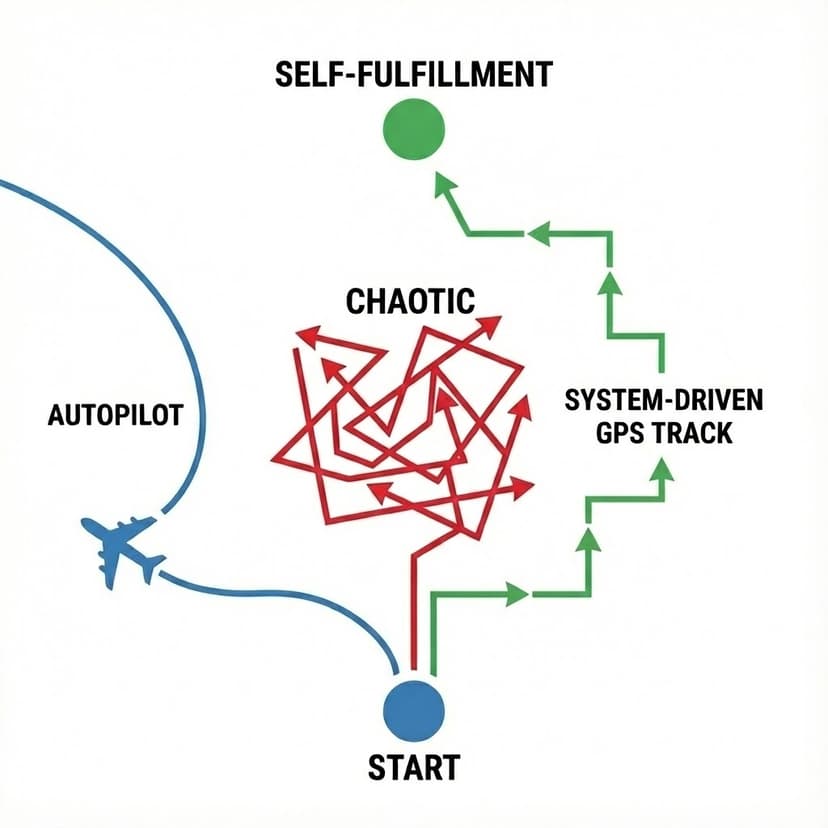
(Adapted from my talk at WAWTECH 2025)